William PK Carter builds worlds where fabric breathes, animals sing, and identity finds its rhythm in thread. Carter’s practice is meticulous, but it began long before she even picked up a needle; art was already within her, quietly fractalizing into the person she’d become.
“Both my parents painted for fun,” Carter says. “And also, my grandmother and grandfather, my YiaYia and Pappou, were a seamstress and a tailor.”
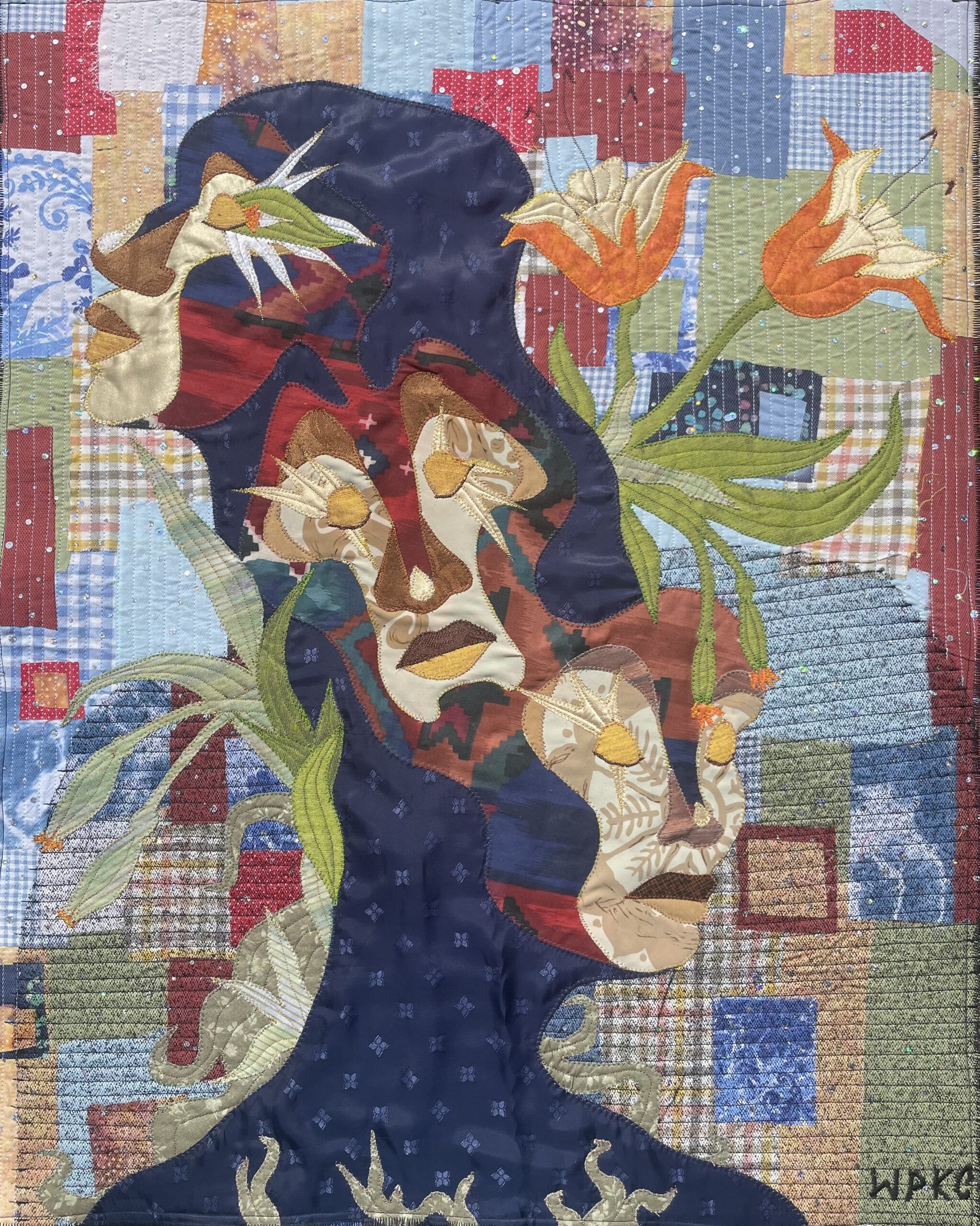
Before Carter could make her own, she watched art being made: paintings on the walls, costumes sewn from scratch. “Even before I could make art, there was art being made around me all the time.”
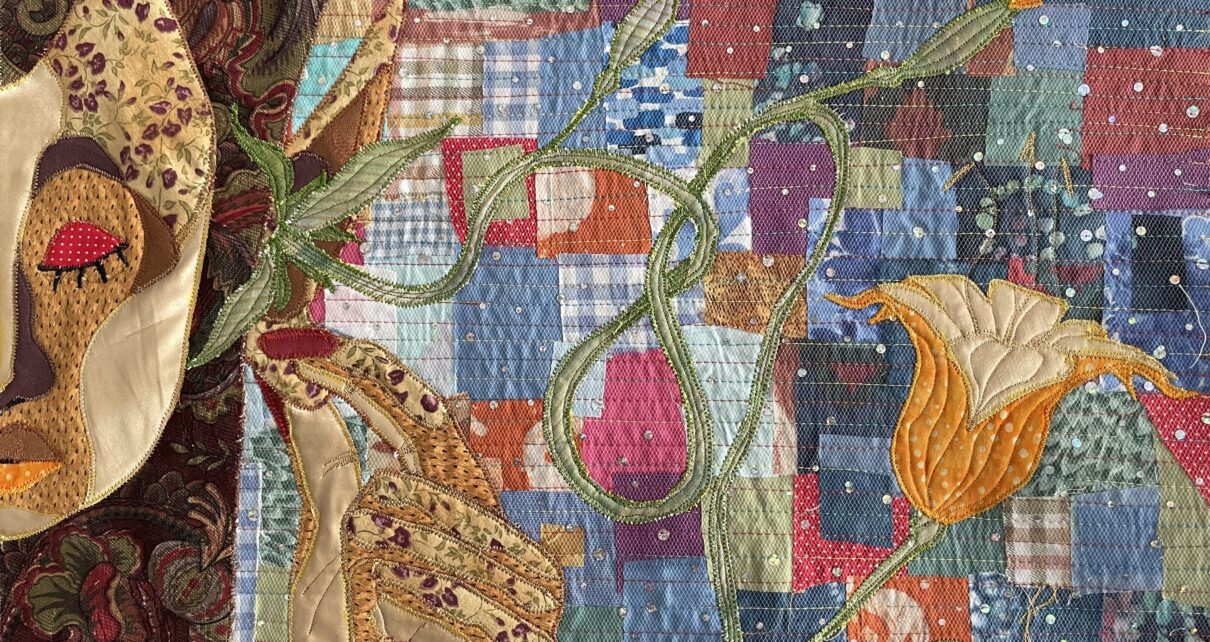
Mediums multiplied early. Painting led to sculpture; both fused when a fiber class at Skidmore College broke things open. “I decided in my junior year that I would combine everything that I had ever done to start quilting,” she explains. Quilting, for Carter, is “an illustrative fiber art that pulls from the skills of painting and digital illustration.” Soon, those surfaces moved.
“I would sculpt out of foam and then pattern their entire surface to be a flat pattern and then make quilts of that flat pattern… soft sculptures that then became puppets.”
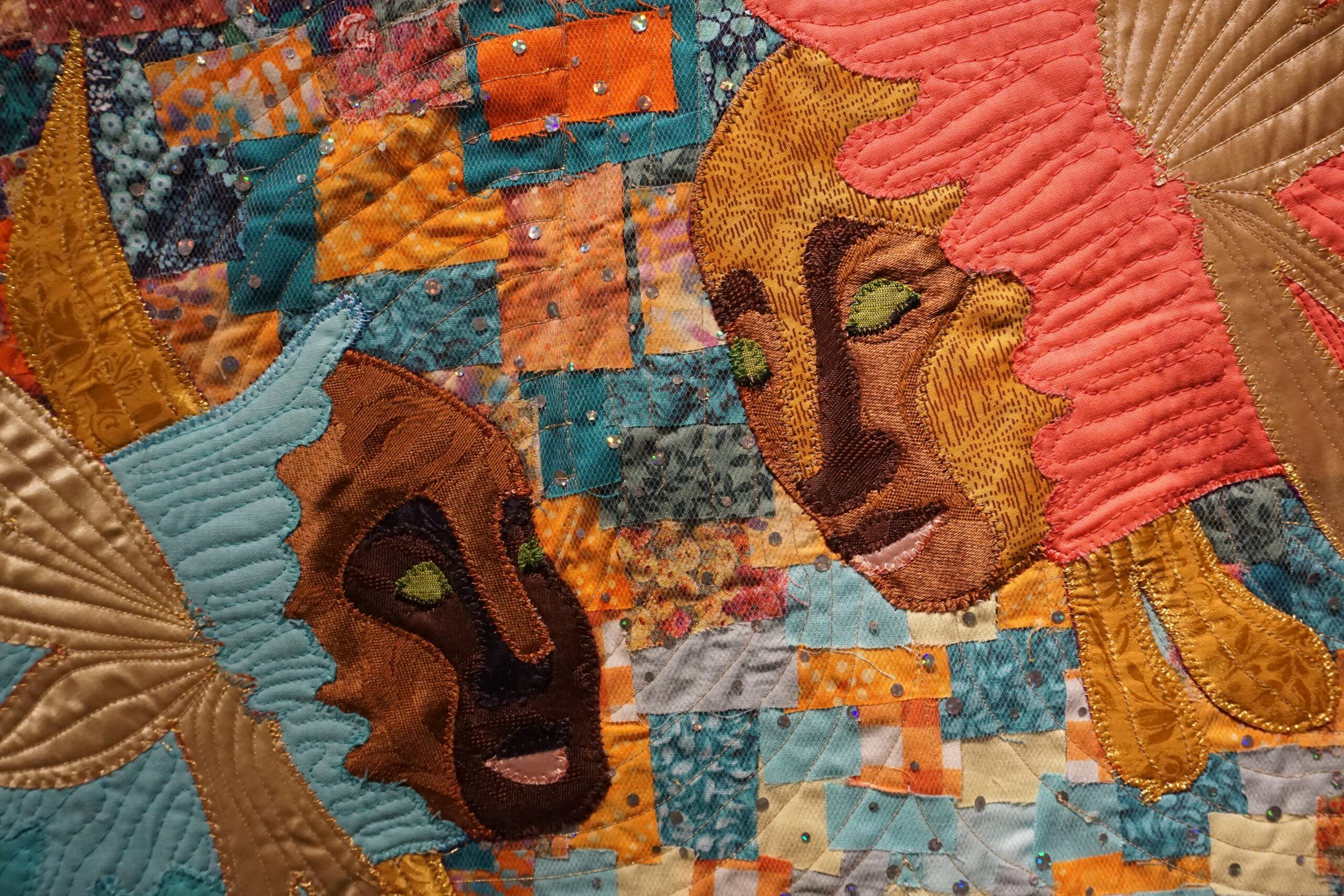
Carter’s days move between designer and doer. For instance, right now, Carter is at the tail end of producing a puppet show at La MaMa Experimental Theatre Club, while also coming off a huge quilting production for her exhibition in Newburgh at Ann Street Gallery. Mornings begin with the practical side of the work—emails, scheduling, and logistics—before shifting into sketches and design. Carter moves between mediums with the same precision, cutting paper patterns that might become quilts or sculptural forms for puppets. The design extends beyond the visual, Carter also records the audio, writes the poetry, and composes the choral arrangements that weave through and animate each piece.
The imagery—human, animal, plant—grew from how Carter learned to recognize herself.
“Being a queer Black person… I had to find myself in little pieces of everything that I saw and everybody that I met,” she says. The result is an embodied cosmology: “I believe that the human experience is more than just the physical body… that version of me is literally just a conglomerate of animals, plants, and other people.”
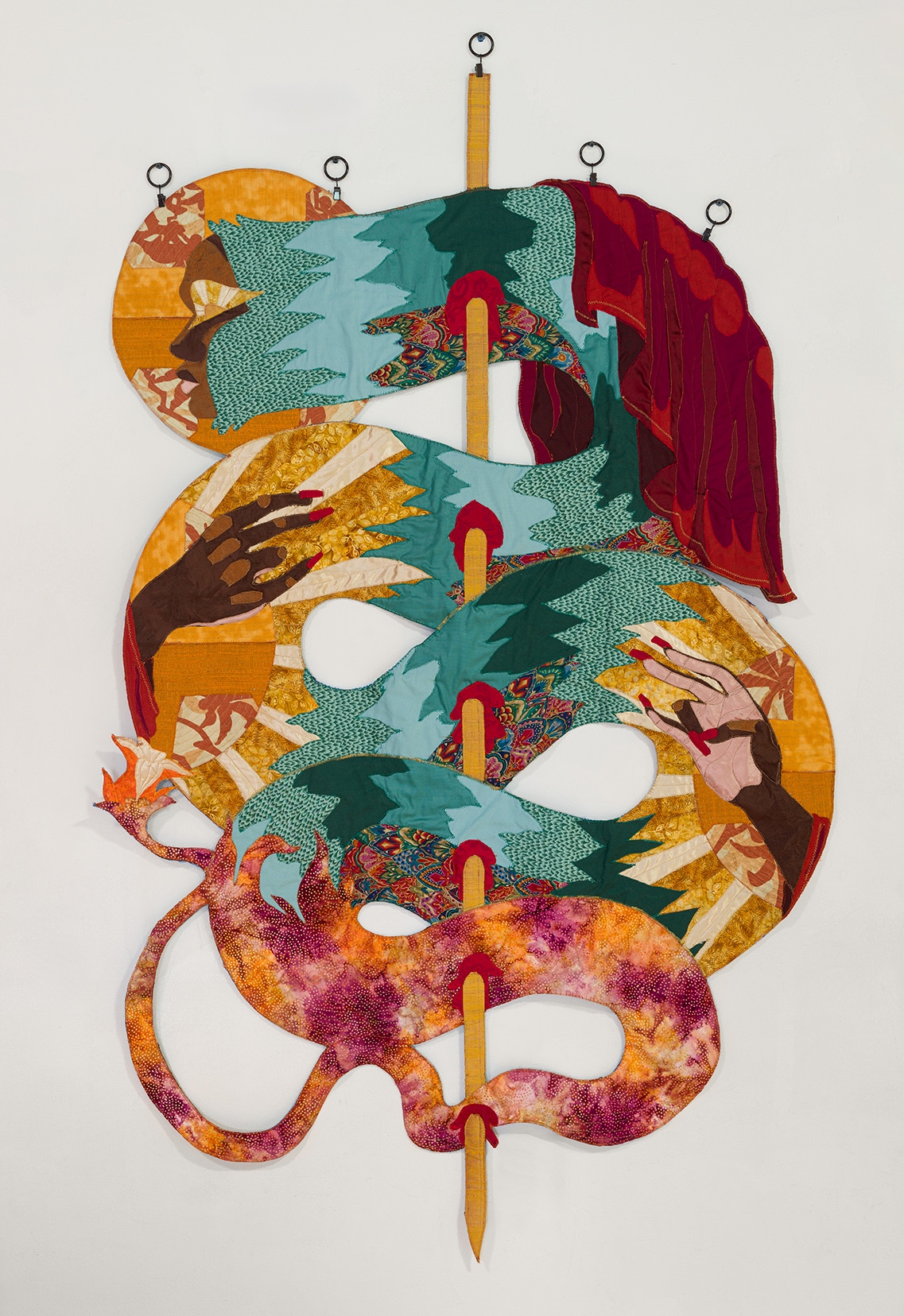
An early language for sanctity also endures. Raised Greek Orthodox, Carter remembers “so much visual wealth,” from stained glass to Byzantine icons. Although Carter no longer practices, those influences remain present in her work. “I use that as a way of honoring where I come from, as well as taking it into a world, into the queer world, into the Black world, where I am much more comfortable and combining all of them.”
Performance is where the work breathes back at the audience. “When you see a performance, you are experiencing it as if you were in it,” she says. The exchange can be overwhelming. When Carter premiered her swan piece, Ripe Fruit, Bruised Fruit, at a Brooklyn puppet slam, she remembered hearing “the audience gasping… dead quiet,” as her voice spoke of shame and internalized homophobia. “I was like crying on stage… maybe one single tear.” After the performance, strangers approached Carter, sobbing and thanking her. “That moment for me was priceless.”
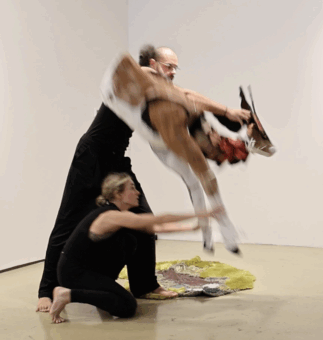
Part of what draws Carter to puppetry is its power to disarm and break through the gatekeeping of the art world. “I think that art should be not only free and accessible to everyone, but also able to be understood by everyone,” she says. For Carter, performance is a way to make art that reaches everyone in the room. Each show becomes a shared moment, where the boundaries between maker and viewer blur and a collective understanding takes shape.
Quilting connects them to another collective lineage. Carter learned how Black American quilters coded information into Underground Railroad quilts, which indicated directions, danger, and topography. “That communication… is so incredibly beautiful to me,” she says. Today, Carter extends that language toward queer survival: “I’m opening it up to be using queer visual language and Black visual language to now tell other people how I’ve survived.”
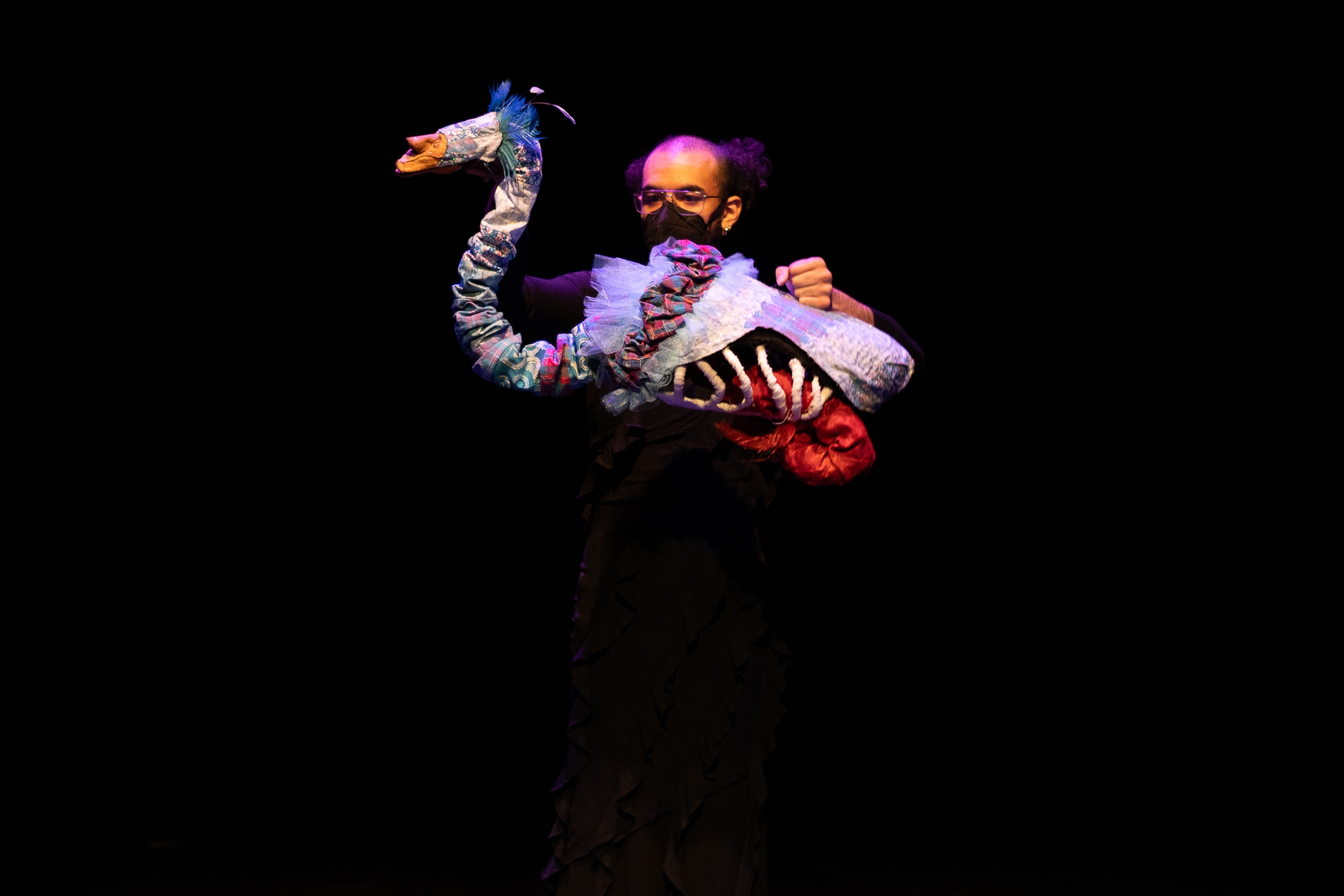
To Carter, transformation is not only a queer metaphor, it’s a truth that threads through every life.“We are always changing and evolving and adding new things to our bodies until… we are a huge collection of experiences,” she says. Expanding transition language to everyone, Carter adds, “helps with one, connecting people, and two, humanizing trans people.”
What’s next is bigger and more communal. “I am now expanding my puppet building to… something with multiple different articulations,” Carter says, bringing in collaborators like Emily Batsford, Maria Camia, Thalya David, Monica Lerch, and Ash Winkfield. The dream is a chorus: “I’m hoping for the future to be able to have four, five, six other puppeteers with me to have a full chorus or cast of puppeteers, allowing so much more puppet life to happen at once.”
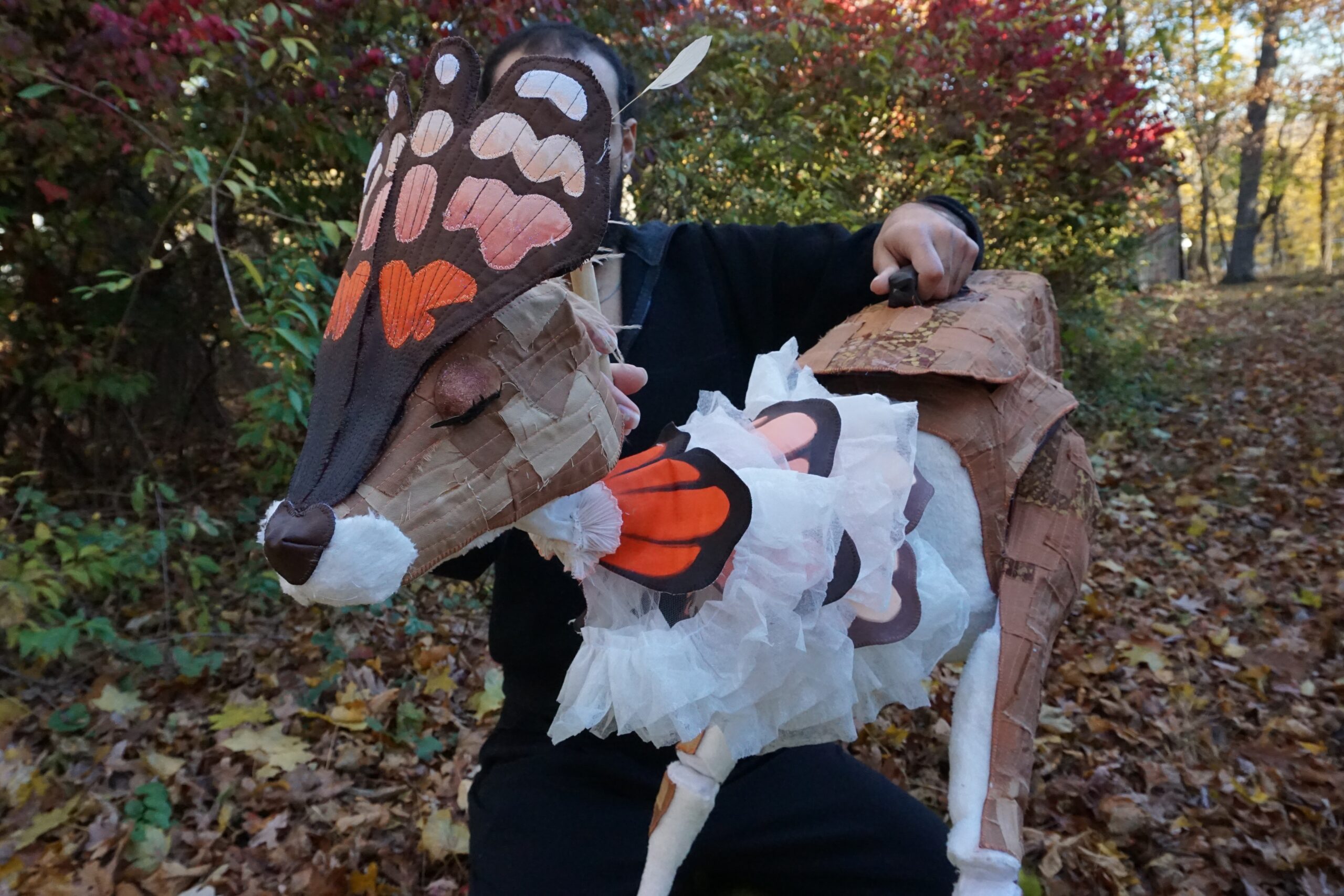
In the meantime, Carter’s calendar is packed: the fellowship exhibition, “Untethered Creatures: bodies of emergent lore”, at Ann Street Gallery in Newburgh (through November 23), with a performance of “For Sport or For Beauty” on the final day; a 15-minute segment of “Beautiful Without Consequence” at La MaMa (November 13–16); “Ripe Fruit, Bruised Fruit” in Los Angeles at Wonzimer Gallery (November 20); two large quilts in “Guiding Ethos” at The Trout Museum of Art; and work in Black Dimensions in Art’s 50th anniversary show entitled “For Liberation and For Life” at the Albany Institute of History & Art. More is coming, because for Carter, the work never really ends; it only transforms.
Find the latest at WilliamPKCarter.com and on Instagram @baeslleaf.