Robert Mango’s art lives in the space where the real and the imagined converge—a place of myth-making, dream-making, and surrealist logic. From his formative years in Chicago, he stood out at the School of the Art Institute, where he quickly became, as he puts it, “the darling of the teachers there” because he had “a kind of a Beethoven sense of seeing something and being able to draw to reproduce it.” Surrounded by the museum’s world-class Impressionist collection, he would return home to paint and repaint the works he saw, sharpening a skill set that was already exceptional. By the time he was seventeen, Mango had been invited to teach college-level courses.

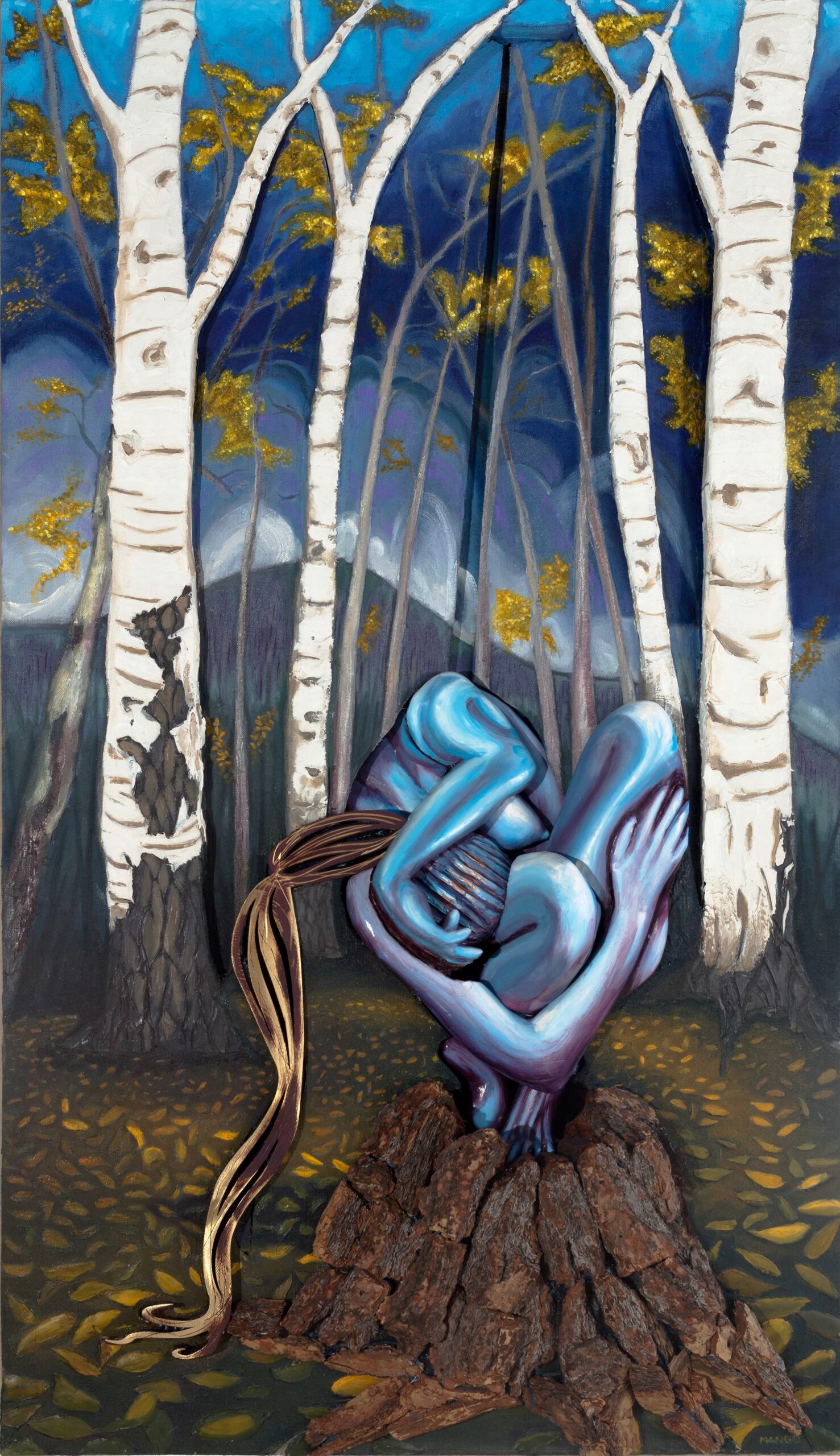
Yet, his trajectory shifted dramatically when he discovered the Surrealists and Dadaists, stepping through what he calls “the Marcel Duchamp doorway” into a world where philosophy, chance, and the unconscious fractally collided. The influence was immediate and lasting, shaping the layered logic of works like La Cathedral, where a life-sized female figure with polished bronze hair emerges from a sculptural forest. In Stream of Dreams, a red-haired muse stands at a river’s edge, her acrylic-fiber hair flowing into hardened-clear-plastic water as sculpted trout swim through. Yosemite Man, inspired by a hike to a secluded mountain pasture, feels like stepping into another century.

By the early 1980s, Mango had become part of Tribeca’s emerging art scene—long before the neighborhood’s multimillion-dollar lofts. His studio became a gathering place for underground artists, filmmakers, and musicians, with the occasional visit from names like Martin Scorsese and Robert De Niro. “It was a scene,” he says. That same drive for creative connection led him to open the Neo Persona Gallery, dedicated to showing work by Tribeca artists at a time when Soho was becoming increasingly commercialized. He also built lofts for new arrivals—often selling them paintings along the way—and soon his work was hanging on entire floors of brokerage firms on Wall Street.
Though New York has been a defining force in his art, Mango’s influences run deeper. A record-breaking runner in his youth, he sees parallels between athletic endurance and artistic discovery: both can push the conscious mind aside, letting the unconscious rise.
“One thing about running is it pushes your conscious mind aside, and things come up from the bottom,” he says.
In fact, it was during a high altitude run, that he first envisioned the aforementioned La Cathedral. This interplay between the two informs his process.
“The job of the artist is to offer the audience an exit ramp out of their own consciousness into that mood.”

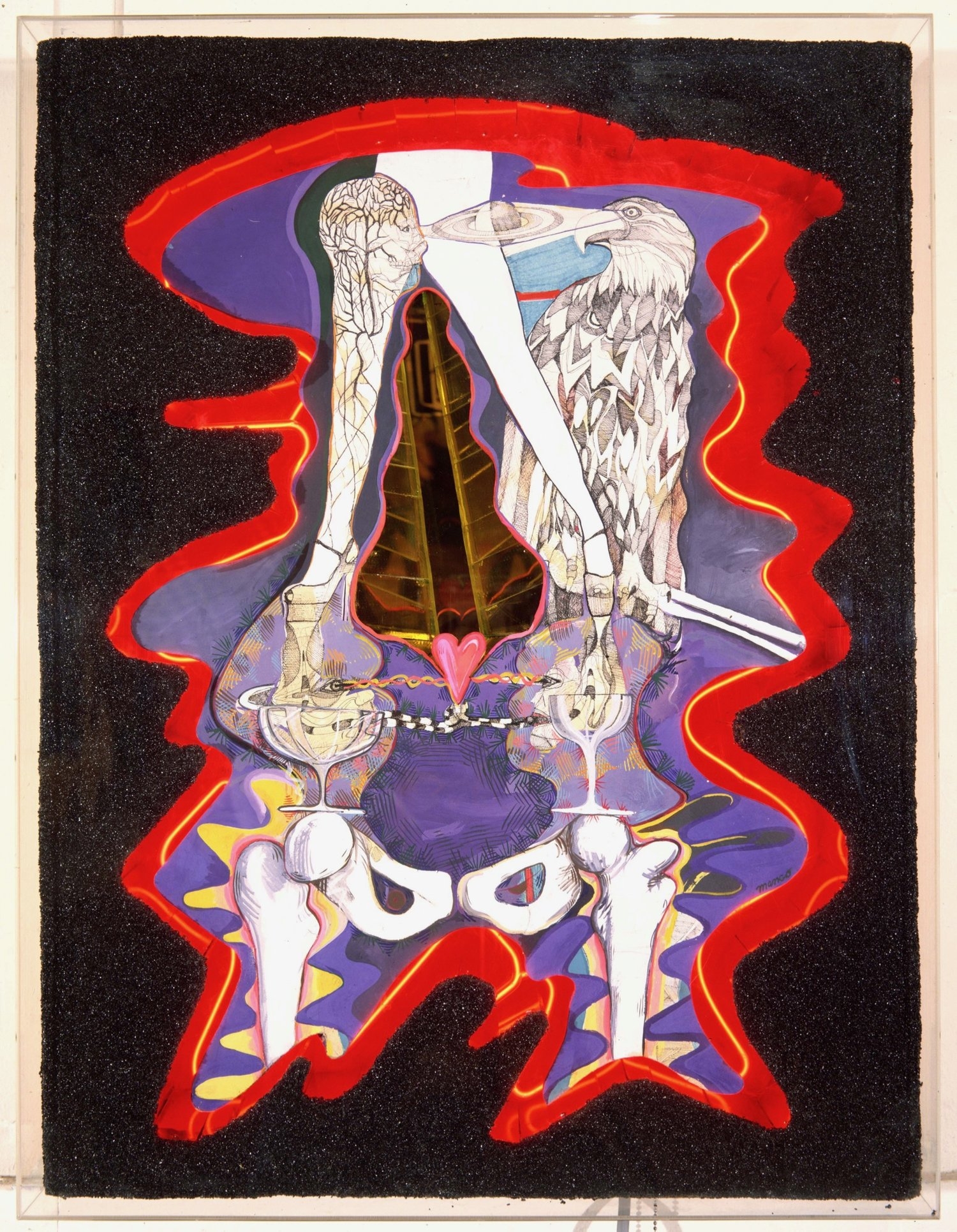
For Mango, that mood often emerges from texture, color, and material. He moves fluidly between the two-dimensional and three-dimensional, pushing paint as if it were sculpture. Works might incorporate polished bronze, sculpted forms, or unconventional elements like acrylic fiber and resin, creating surfaces meant to be felt as much as seen. “Painting’s first cousin is cooking. Its next cousin on the other side is poetry,” he intonates.
“The difference between great food and good food is texture—how it feels on your tongue. Same thing in a painting. The texture and the color—it should enthrall your senses.”

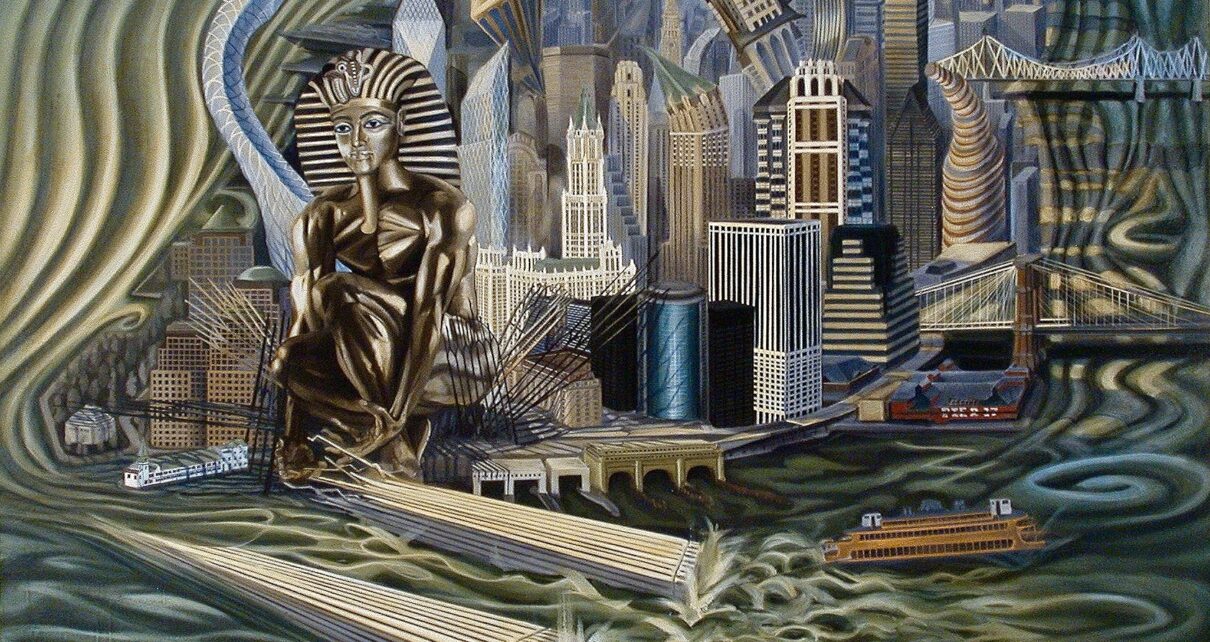
Mango’s relationship with New York remains as electric as it was when he first arrived. “I have this love affair with New York,” he asserts.
“I felt like when I got here it was a giant animal and I was on its back and it was trying to kick me off. The voltage is even stronger now.”
Even after building a second studio along the Delaware River during the pandemic, the city still fuels his imagination—its contradictions, energy, and endless capacity for reinvention are a constant source of inspiration.
“I’ve seen so many changes,” he notes, “and I still have the fantasy of it alive in me.”
Robert Mango’s next solo exhibition will be at the Spiva Art Center, St. Louis, MO. To discover more about Robert Mango and his work, please visit his website.