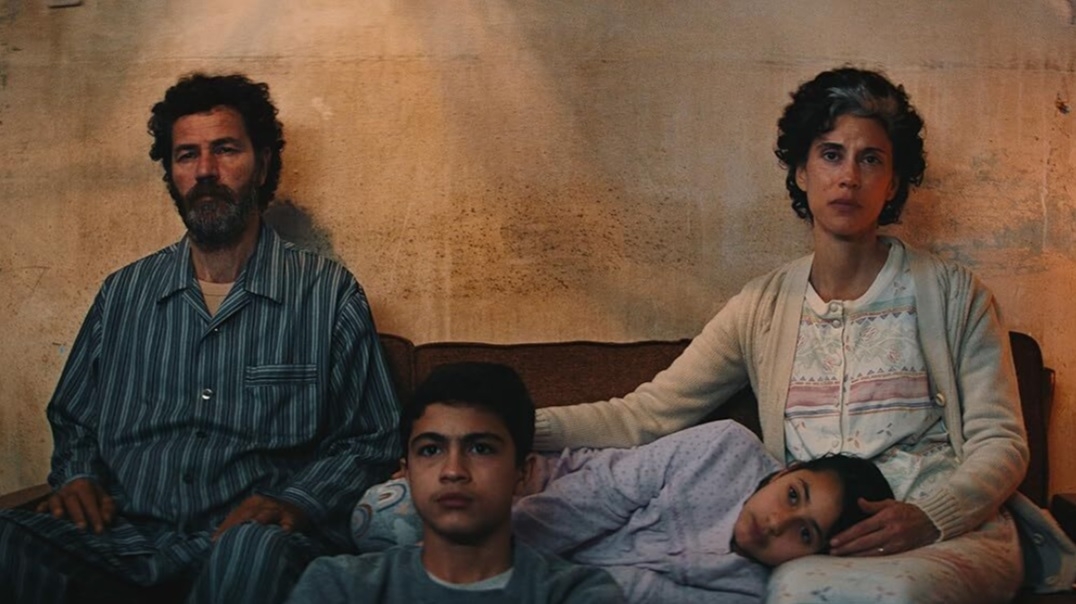
A heart-wrenching historical narrative film, “All That’s Left of You” (2025) is exactly what the world needs Today. Written and produced by renowned Palestinian-American Cherien Dabis, it epitomizes what requires addressing more than ever: Stories told through film (and not just journalism) captivate a varying intensity of what it is to be human. Revisiting stolen territories in the now, the film torments viewers into awareness with graphic truths otherwise unspoken and suppressed. It forthrightly fractalizes viewers, compelling them to lay down inborn reluctance to facing the brutality of living under occupation. Life is neither sweet nor sour, as Dabis illustrates in this latest historical telltale journey of a single family fleeing the Nakba (1948), or ethnic cleansing: Zionist erasure of the indigenous Palestinians.
Currently nominated for an Oscar, the film has won more than 24 awards to date and is set to launch everywhere this January 2026. Having premiered at the 2025 Sundance Film Festival, “All That’s Left of You” was selected as Jordan’s official submission for Best International Feature Film at the 98th Academy Awards. Despite difficulty securing a U.S distributor, truth does prevail. The breakthrough performance would not be present without the following considerations outlined by Dabis herself during the Q&A moderated by Canadian actor, producer and activist Eliot Page.
With respect to the overall storyline inspiration, Dabis ascertains:
“We Palestinians are relegated to aimless, faceless headlines and numbers. And our personal stories are not told how we are impacted, and our lives are shaped and changed by all of this violence that’s just been imposed on us decade after decade. No one knows that. No one really understands the impact or the trauma on the Palestinian people, like the kind of and the different kinds of violence… not just in physical violence, the psychological violence.”
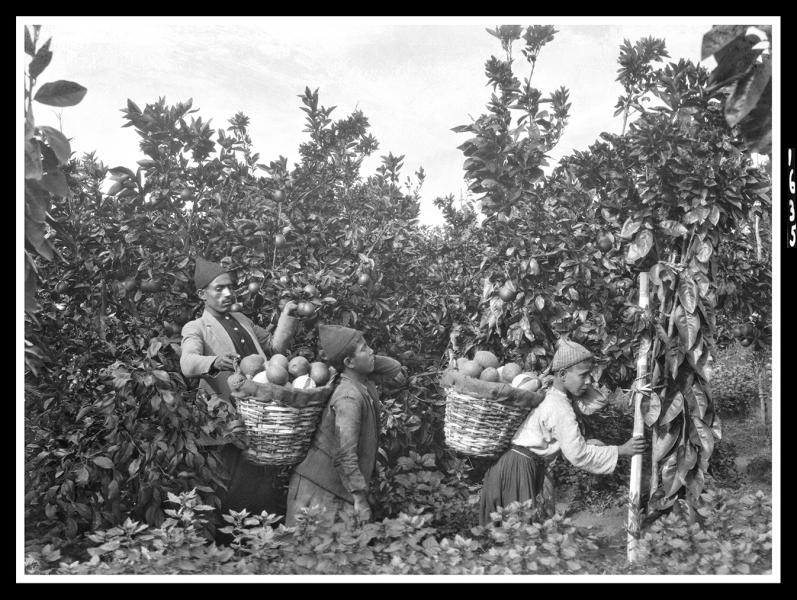
Featuring the infamous Bakri ‘acting dynasty family’—Mohammed, Salim and Adam—as actors, “All That’s Left of You” presents ‘a multigenerational portrait of a Palestinian family’ whose existence remains turmoiled by dispossession and exile. Beginning with a pivotal shooting scene from the 1988 intifada protests, Hanan, the injured teenager’s mother played by Dabis herself, proceeds to recount the past leading up to aforesaid occurrence. Spanning her grandfather-in-laws’ expulsion, and family’s consequential displacement into refugee camps from the heavenly expanses of citrus grove in Yaffa (now Tel Aviv)—realities worsen amid brutal apartheid and colonial uproar: Occupation.
“You know, this word, occupation is so benign. It’s such a benign sounding word for something that is brutally violent, and Palestinians have been killed daily under occupation for decades. [They] have been so patient and generous for so many years and have shown so much humanity that the world so sadly never gets to see. That is for me really what I wanted to focus on in the film. And everything else is just background. It’s what we are attempting to survive. It’s what we are attempting to overcome. It’s about the trauma that’s being imposed on us that we’re navigating, daily.”
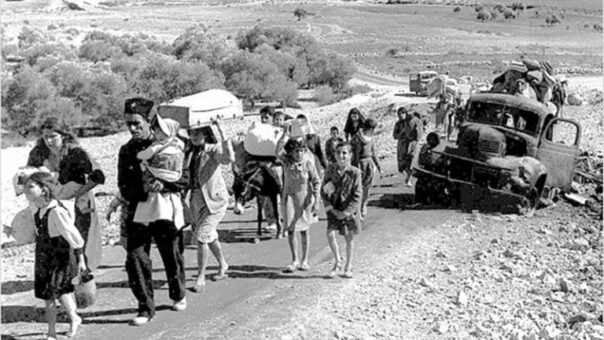
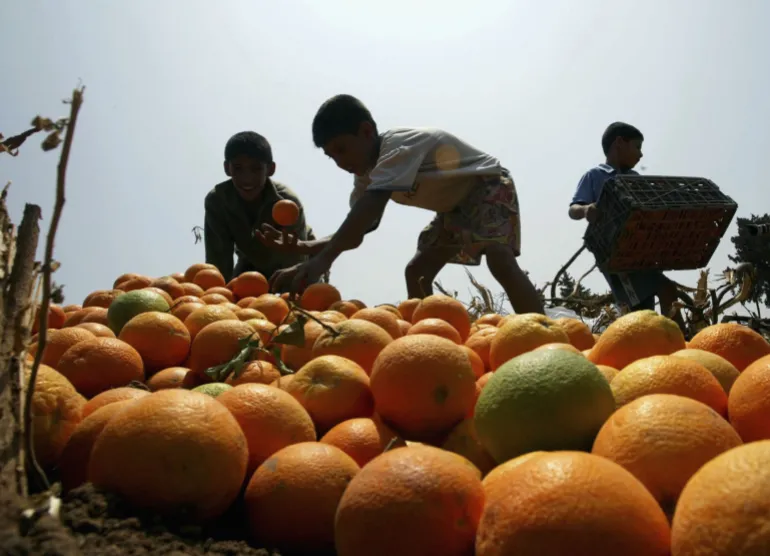
Not wanting to give away too much of the film, I will say this: Anyone who really watches it, will not be able to undo what they see. The characters embody indigenous Palestinians’ mere longing to live with dignity amid scenes of humiliation, grief, and delicate decisions regarding organ donation and intimate burials. Peace… they lift not weapons nor hatred, but display acquiescence in whatever way, shape, or form necessary to subsist and persist on their land. Forbearing the worst—this Palestinian family pulls through—refusing to leave, even after enduring hell: Arrest, torture, and brutal segregation. Their orange and olive groves—their livelihoods—are ripped from underneath their feet, as was everything from the Palestinians, and this is just one microcosmic enactment of horrific trauma continuously endured, and never-ever seemingly understood or accepted from within Palestine, its diaspora, and the World.
A must-see film addressing modern parenthood amid occupation, Dabis highlights the importance for people to comprehend the “impact of this ongoing violence and occupation, on families, on parents, on kids, on relationships.” She was inspired by just watching her dad over the decades. With respect to the horrific scene of father with son confronting the Israeli army, she asserts:
“I mean, as an eight-year-old, I just remember my dad burning with humiliation. He confronted the soldiers trying to reason with them and trying to talk some sense into them […] Just seeing him kind of disappear and radically change as he witnesses the deterioration of his homeland, the disappearance of his homeland […] watching him become angrier and angrier and more and more disillusioned, and then see his health suffer, and just being like, ‘why doesn’t the world understand?’ ‘How are people not impacted by what’s happening?’ That was for me the heart of the film.”
Then there’s the logistics of shooting the film—which was relegated to outside of Palestine post October 7th 2023:
“By October 7th, the West Bank cities were being sealed off […] within hours, not even within days. Checkpoints were closing. There were rumors that the borders were going to close. We were hearing the fighter jets, and my foreign crew was like, ‘what have I gotten myself into? Get me out of here.’ Their families were calling worried, so within 24 hours, they wanted to evacuate, and it was clear we weren’t going to be able to move around […] we had to stop prepping […] so within three days we evacuated everyone, went through Jordan to Cyprus, and thought, ‘okay, we’ll start with this part of it. And then maybe we can return to Palestine.’ I kept thinking like, ‘oh, we’ll return to Palestine, and of course, things just continued to escalate. We were never able to go back.”
Loss of return is exactly the Zionist goal. Cherien Dabis and her crew would end up filming in Cypress, Jordan and Greece. “It was so logistically probably one of the biggest nightmares of any producer ever.” They were watching scenes from Gaza mirroring those of 1948, considering the incredulity of it all, amid miracles making it possible for them to keep going: “It took us 11 months took them to shooting a film. That was how much we stopped and started and just […] it was like the whole time just trying to figure out, well, ‘what are we doing? Where are we going? Are we going to be able to finish making this film?’”
“So we were really living and breathing it and recreating it. The timing of it was just so unbelievable.”
Persisting through never-ending obstacles—financial, scenic, and otherwise—the end was shot in Greece. Facetiming Palestine also helped fill in production spheres…
“We were looking for Palestine everywhere but Palestine. We had to put so much more money into our department to construct these locations outside of Palestine. I did manage to get a remote crew to shoot for two days in Palestine with me on FaceTime, so we were able to get some shots.” There were some places I really was like, ‘I have to we have to show this place’, so the drone shot over the ocean, looking up at Yaffa in 3D visual effects to look like Yaffa in 1948.”
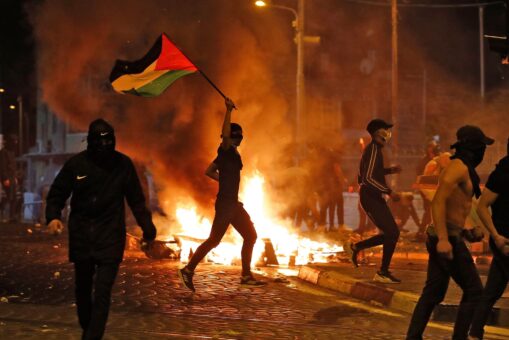
Constructing the entire movie in her head prior to writing, Dabis enlisted cinematographer Christopher Owen to help orient the cohesiveness of each time period. Employing color depth and palette and camera movement to iterate the emotional story at various time periods. Beginning in 1948, the camera is more stable to reflect security and depth. “You don’t see anything handheld; it’s all like dolly or sticks, and the colors are really rich, sophisticated and urban for this upper middle-class family.” By the 1970’s, as the family is thrust into the refugee camp, the colors shift to “more poppy– a little cheaper, and more superficial.” By the 1980’s, colors head into orange and red, to represent protest and rage… whereas by the end, color palettes segue to monochrome: “our characters [become] the only warmth in this world.”
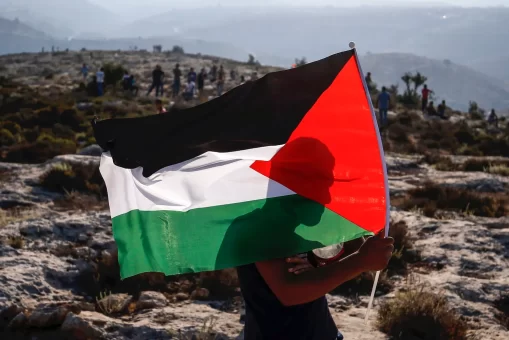
In witnessing what Dabis claims is “one of the most difficult movies to get made,” I must admit that my neck was soaked with tears by the end. She created “a movie about what’s happening as it’s happening,” enduring emotional devastation that made it nearly impossible to persist through live streamed yet inherently ignored genocide. Yet producing and enduring remained vital enough to manifest a legendary film that makes envisioning a possible future for Palestine.