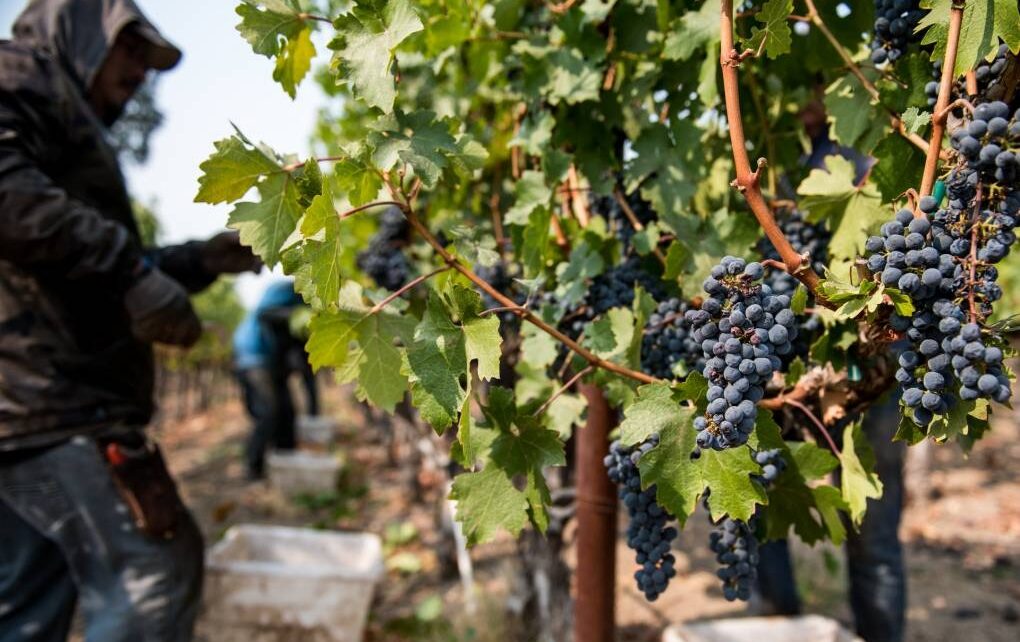
Hispanic Heritage Month arrives this year against a backdrop of nationwide immigration enforcement that has swept through agricultural regions across the country.
ICE arrests have spiked following new enforcement policies under the Trump administration. While raids have been reported in California’s Central Coast, Ventura County, the San Joaquin Valley, and Oregon’s Willamette Valley, the enforcement patterns raise questions about which communities bear the brunt of immigration crackdowns.
The contrast became stark on June 12, 2025, when Moises Sotelo was arrested by ICE after leaving his home in Newberg, Oregon. The respected vineyard manager and owner of Novo Start Vineyard Service had no criminal record and had been navigating the legal immigration process for years. His arrest wasn’t just about enforcement: it was about sending a message.
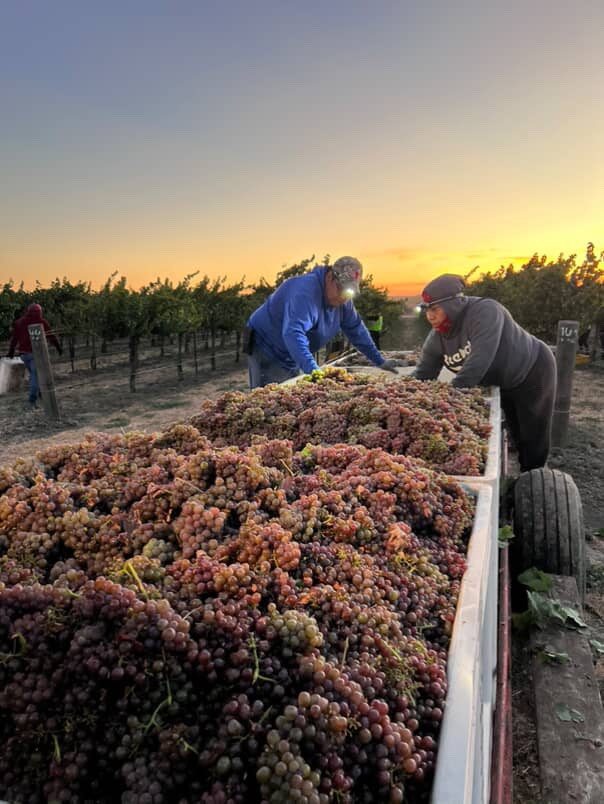
Observations from Wine Country
David Salazar, owner of Reclamación Wines and a first-generation Mexican-American whose parents were farmworkers, has been watching the enforcement patterns from his base in Napa Valley.
“I find it ironic that none of the ICE raids have hit Napa,” he observes. “I’m grateful for it, but I also think that it’s not a coincidence.”
While comprehensive enforcement data by region isn’t readily available, Salazar’s observations point to a broader pattern of selective enforcement. Napa Valley, despite depending heavily on immigrant labor like other agricultural regions, appears to have avoided the high-profile raids seen elsewhere.
Salazar attributes this to calculated economic self-interest rather than compassion. The wealthy vineyard owners who likely supported the very policies driving these raids need their workforce intact. “Everybody that lives here that has a vineyard or has property is, no doubt, a millionaire.”
The protection serves multiple interests. Tourism generates massive revenue, and raids would damage Napa’s carefully cultivated image. “You can’t walk Calistoga and Napa on the weekend without seeing sundresses and people in suits clearly here for wine tasting,” Salazar notes. “If that were coupled with immigrants being thrown into vans, I think it would not look so great.”
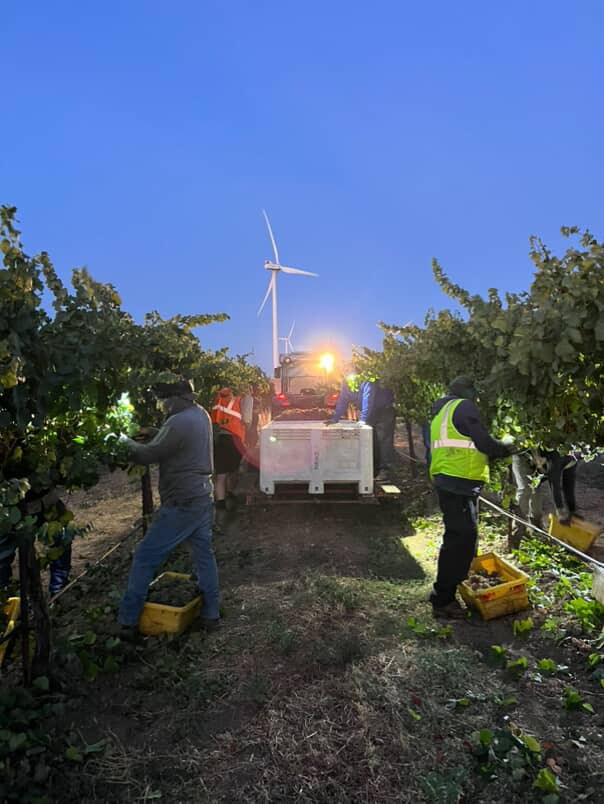
But more importantly, Napa’s billionaire class needs their cheap labor force. The wine industry is cyclical: after harvest comes pruning, then shoot thinning, then harvest again. “Everybody that does the pruning is immigrant,” he notes. Disrupting this workforce would directly impact the bottom line of some of America’s wealthiest vineyard owners.
The Economics of Selective Enforcement
The pattern reveals how economic power shapes immigration enforcement. It’s not just about documentation: it’s about protecting profitable labor arrangements.
“I think the difference between a migrant that works at a hotel and one that works at a vineyard owned by a billionaire: there’s more influence by the billionaire than somebody who owns a franchise of a Burger King,” Salazar notes.
This isn’t about compassion for immigrant communities. It’s about preserving a system that benefits wealthy landowners. The same people who likely supported the administration driving these immigration crackdowns need their cheap workforce intact. Raids in Napa would expose the hypocrisy of supporting anti-immigrant policies while depending entirely on immigrant labor.
The protection extends beyond Napa’s borders to surrounding communities like Vallejo, Fairfield, and Vacaville, where many vineyard workers live. Further evidence that this isn’t coincidental but calculated to preserve the entire labor ecosystem that wealthy wineries depend on.
A System That Serves Power
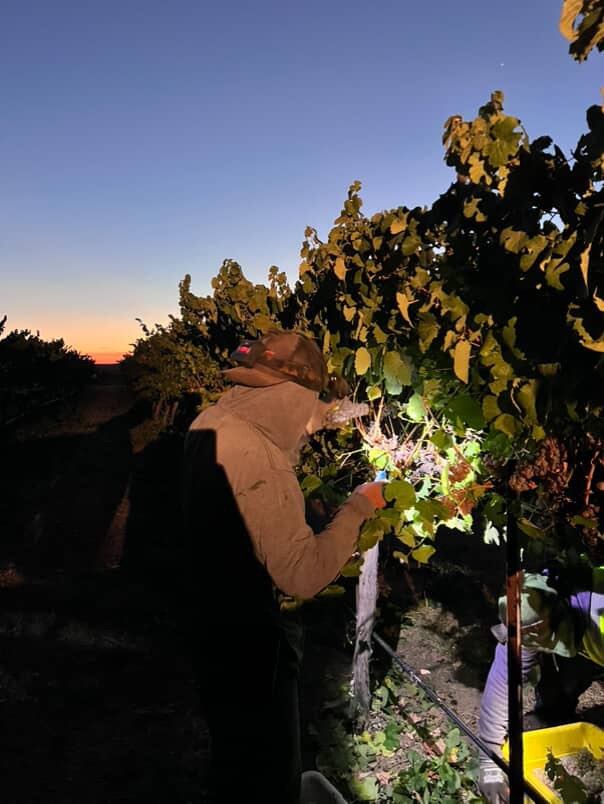
This selective enforcement reveals the cynical calculations underlying immigration policy. The pattern isn’t new. In late 2019, the Trump Organization fired undocumented workers from Trump Winery in Virginia after the harvest season was complete. The timing was calculated: Virginia’s grape harvest typically runs from late August through mid-to-late October, but the firings happened on December 30, 2019.
As attorney Anibal Romero noted at the time, “Donald Trump has known about these workers for months. He waits until the fields are tended, grapes picked, wine made. He then discards them like a used paper bag.”
This precedent raises uncomfortable questions about what happens in places like Napa after harvest season ends. Will the current protection continue year-round, or will enforcement conveniently resume once the grapes are picked and processed?
High-profile arrests like Sotelo’s serve a dual purpose: they terrorize immigrant communities into staying compliant while preserving the cheap labor force that the wealthy depend on. Workers see the message (don’t rise up, don’t become too visible, don’t challenge the system) while the workforce remains intact for those with the power to protect it.
The Economics of Agricultural Labor
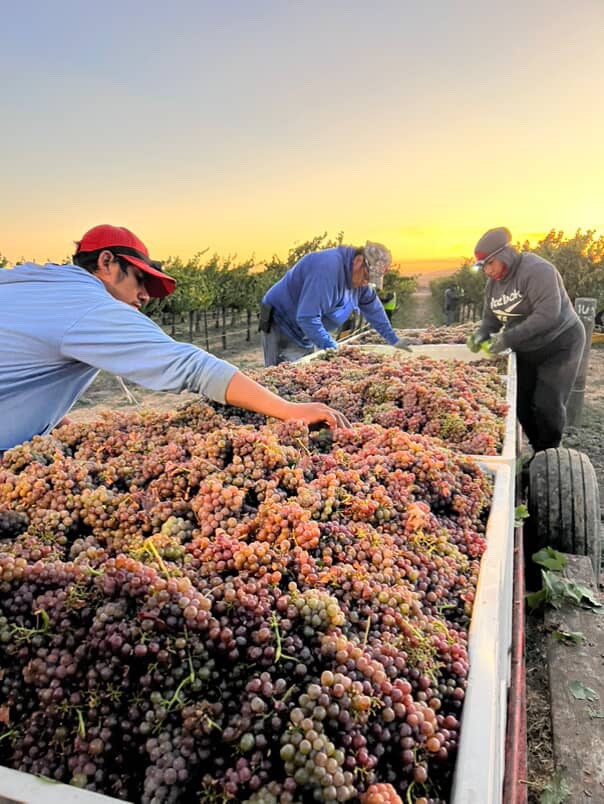
The wine industry’s dependence on immigrant labor is undeniable. According to industry data, 73% of Napa County agricultural workers are immigrants. This became starkly apparent during “A Day Without Immigrants” protests, when Salazar witnessed operations grind to a halt.
“I visited about two or three wineries that day, and they said, ‘Yeah, we can have a meeting, but nobody’s here today, so no wine work is being done,'” he recalls.
“If every Hispanic stopped going to work in the wine industry, the wine industry would collapse entirely,” Salazar states. “And that’s 100% true. Not only for the wine industry, but for the service industry, restaurant industry and construction industry.”
Yet despite decades of low agricultural wages, those savings haven’t reached consumers. “Food’s as expensive as it’s ever been,” Salazar points out. “Houses are as expensive as they’ve ever been. So where do these profits go? They go to owners, shareholders, investors.”
Beyond Heritage Month
The current enforcement patterns reveal how economic power shapes who gets protected and who gets targeted in America’s immigration system. Whether through wealth, political influence, or geographic advantages, some communities appear better insulated from enforcement than others.
Hispanic/Latino ownership represents less than 1% of wine brands despite making up the majority of the workforce. “I don’t forget where I come from, and I don’t forget that I could be in the same shoes as many of the people dealing with ICE raids right now,” Salazar reflects. “What’s happening to our people and to the large percentage of the workforce in America is completely unjust and barbaric.”
This Hispanic Heritage Month highlights not just contributions to be celebrated, but vulnerabilities that persist even for those who’ve followed legal processes and built businesses in their communities. The agricultural industry’s dependence on immigrant labor continues alongside a system that treats those same workers as expendable, except when their removal would inconvenience the powerful. precedent shows how this calculated exploitation operates: use workers when needed, discard them when politically convenient, and always ensure the timing serves those in power.